
Sharara Suits for Women Online | Kurta, Sharara & Dupatta

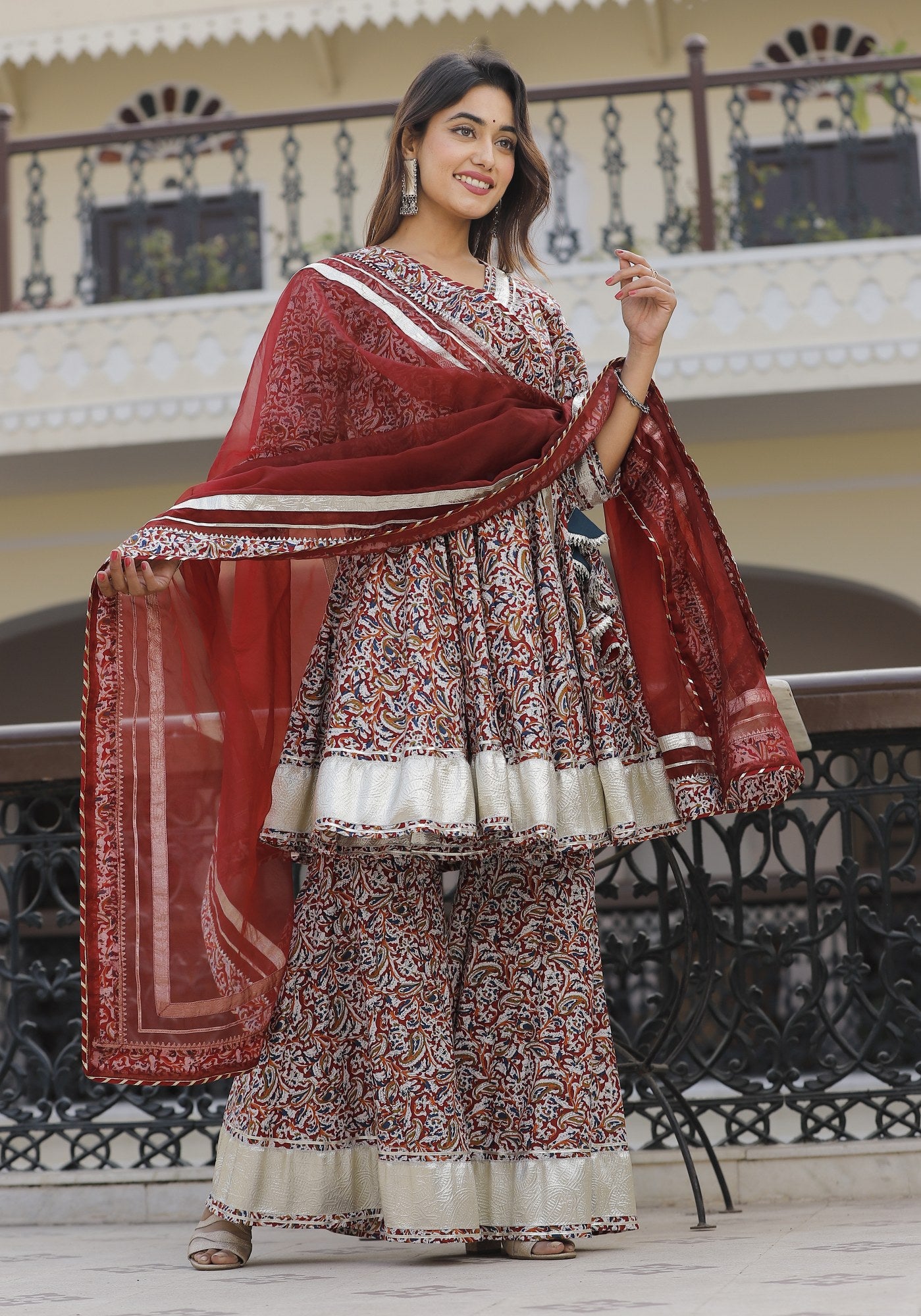

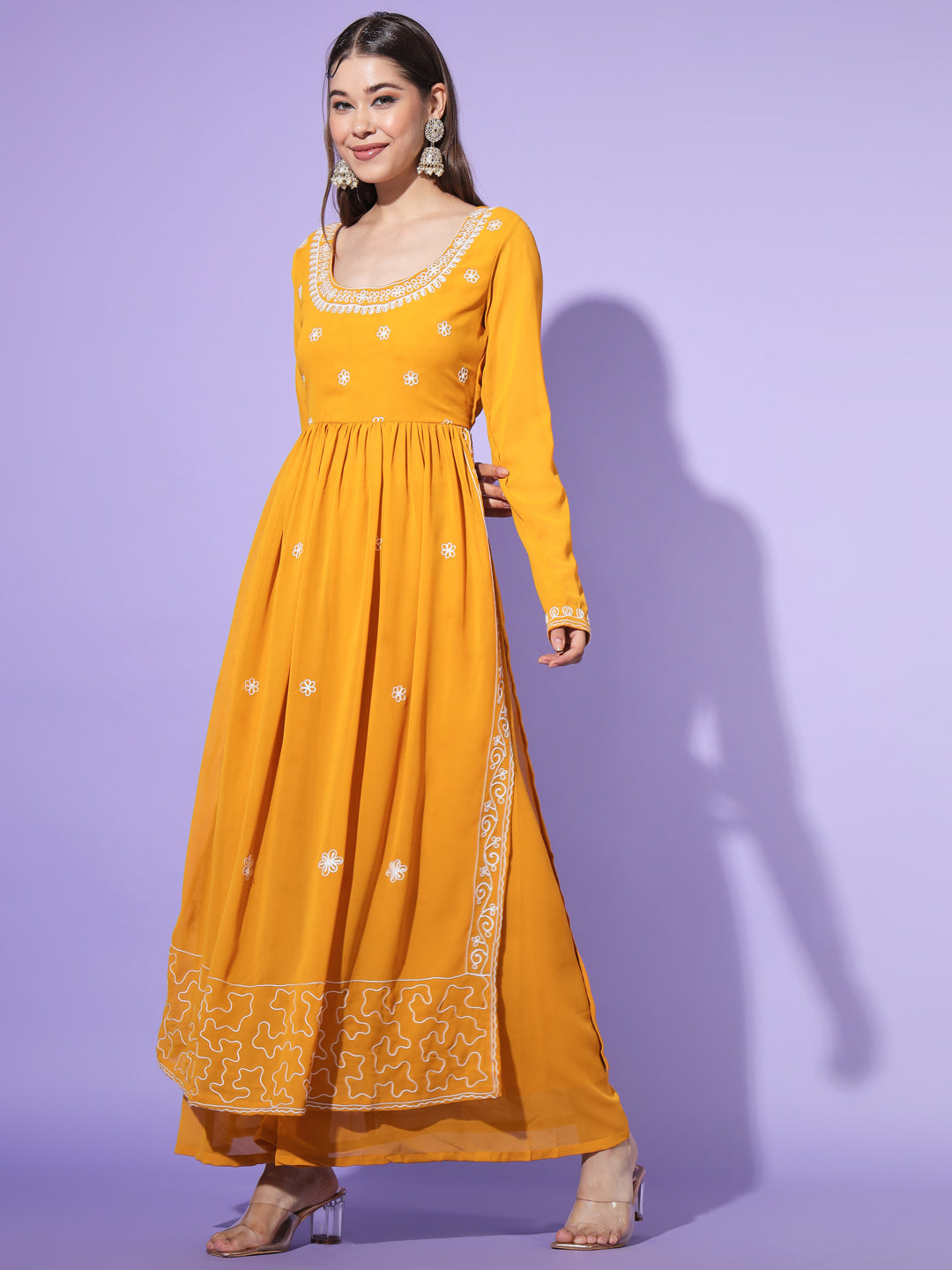


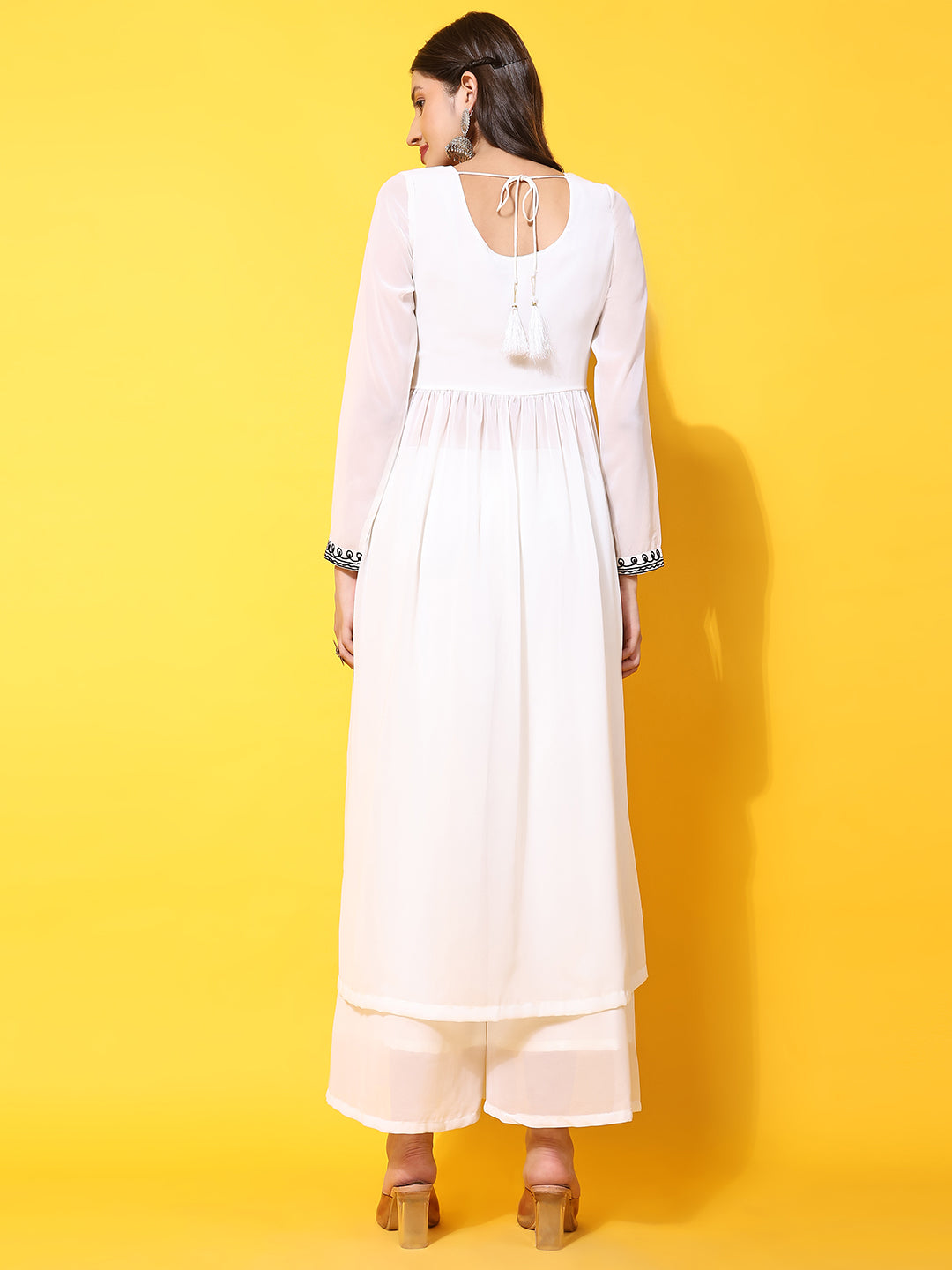

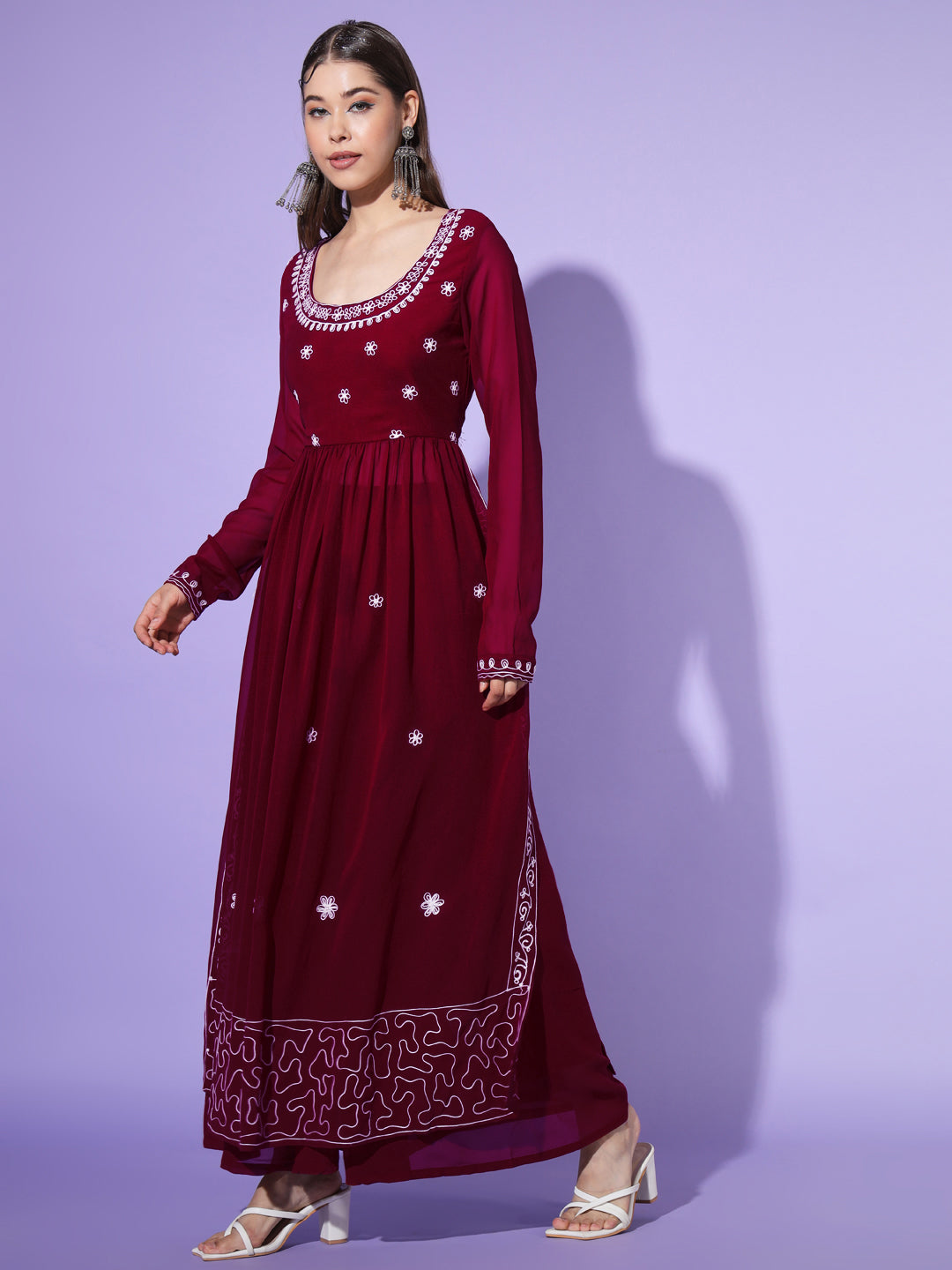

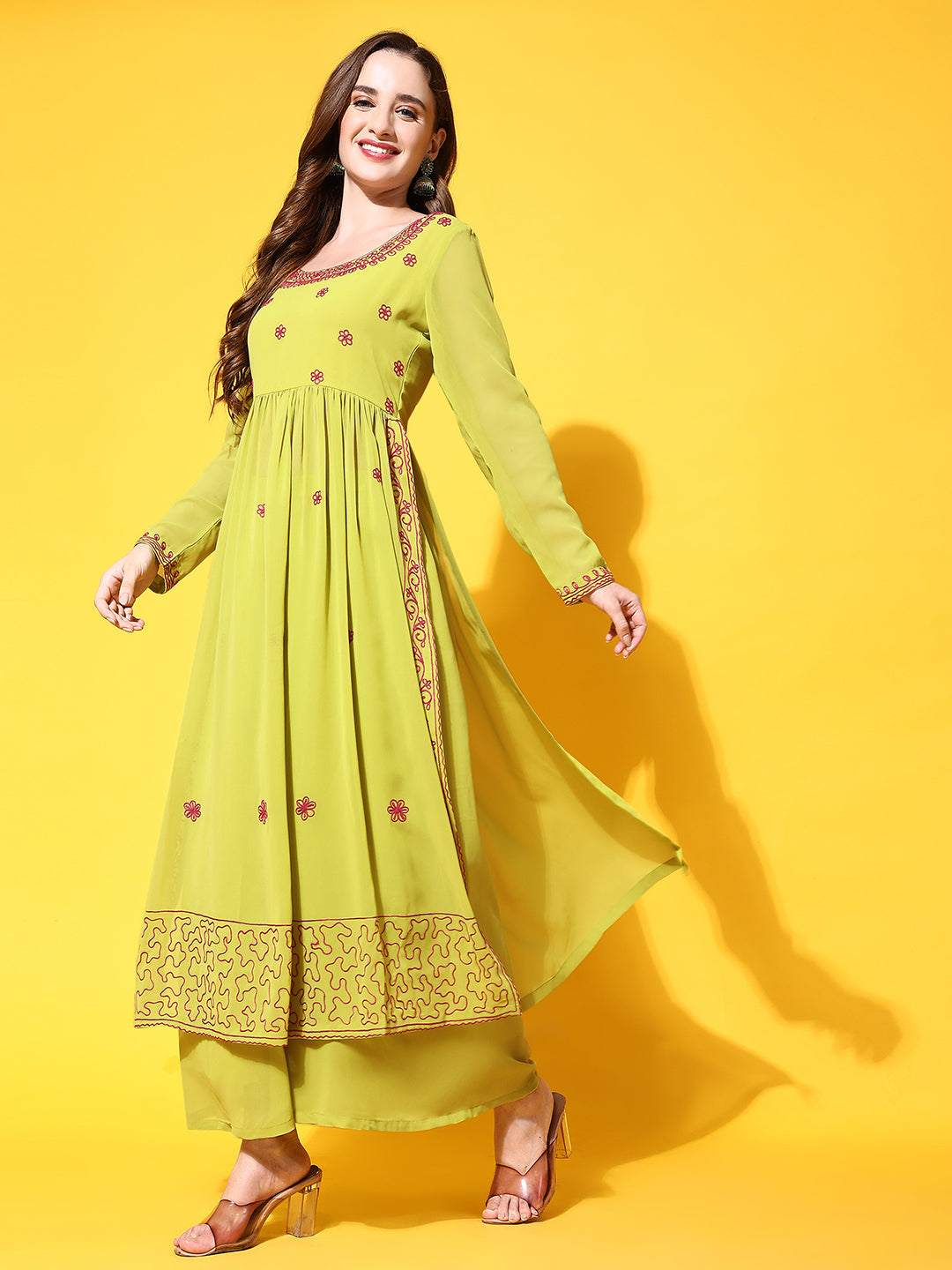

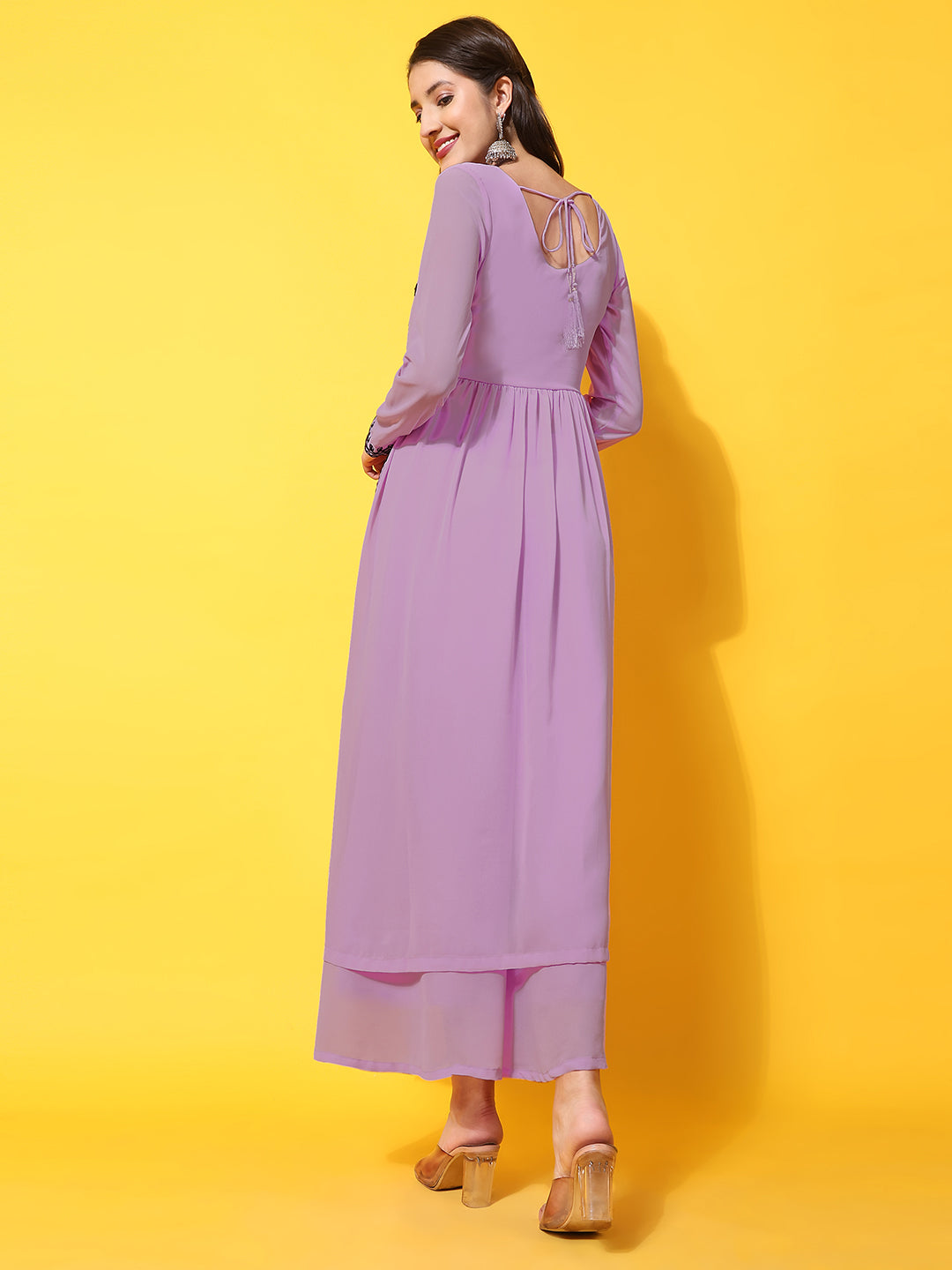


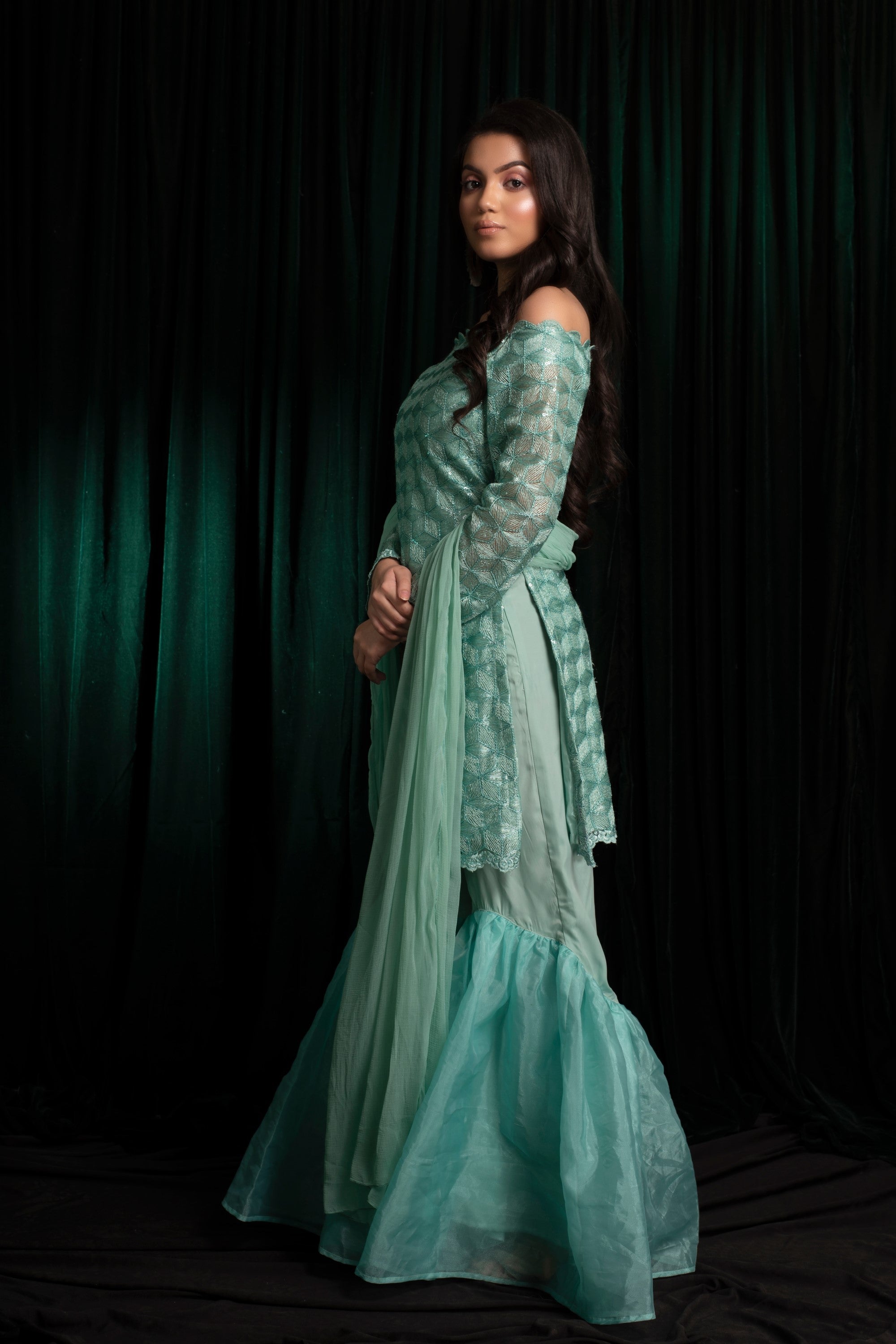

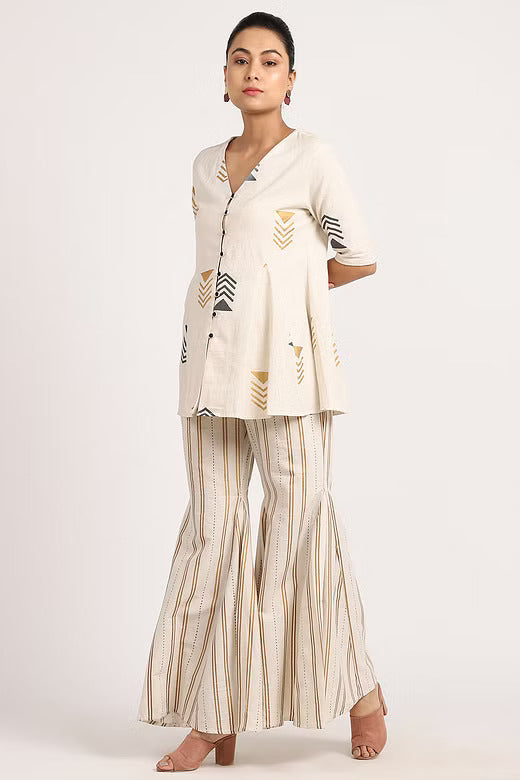


A sharara is a pair of wide-legged trousers that flare out from the waist or hip and fall to the floor, worn with a shorter kurta and a dupatta. The silhouette traces to Mughal-era Awadh and is still most strongly associated with Lucknow, where it remains standard festive and wedding dress.
The useful thing to know before buying: a sharara photographs almost identically to a lehenga, but it is divided between the legs. You can climb stairs, sit cross-legged and dance in one without managing a skirt. That combination the look of a lehenga with the practicality of trousers is why sharara suits have become the common choice for guests at long functions.
Sharara, Gharara, Palazzo or Lehenga?
These get used interchangeably and they are genuinely different garments.
|
Garment |
Shape |
How it differs from a sharara |
|
Sharara |
Trousers flaring from the waist or hip to the floor |
- |
|
Gharara |
Fitted to the knee, then flares sharply |
Visible joint at the knee, usually gota-trimmed |
|
Wide straight leg, no increase in width |
Falls straight rather than flaring out |
|
|
A skirt, not divided between the legs |
One piece of fabric; a sharara is trousers |
|
|
Draped low at the crotch, tapered ankle |
Narrows at the ankle instead of widening |
The distinction people most often get wrong is sharara against gharara. A sharara widens steadily from the waist or hip all the way down. A gharara is fitted through the thigh to the knee and then flares sharply outward, with a visible horizontal seam at the knee that is traditionally trimmed with gota. The gharara is the older and more formal of the two.
Against a palazzo, the difference is whether the leg widens. A palazzo falls in a straight column of the same width from hip to hem; a sharara keeps getting wider, which is what produces the sweep. And against a lehenga, the difference is construction: a lehenga is a skirt, a sharara is trousers.
The Kurta of Sharara Suit
The top decides how much of the sharara you actually see, which is the main styling decision in this category.
|
Kurta style |
Where it ends |
Effect |
|
Short kurti |
At or just below the waist |
Shows the full flare — the classic pairing |
|
A-line kurta |
Hip to mid-thigh |
Balances the volume, most wearable |
|
Straight kurta |
Mid-thigh to knee |
Covers more; reads restrained |
|
Anarkali kurta |
Flared, knee or below |
Volume top and bottom; most dramatic |
|
Sleeveless / strap |
Varies |
Contemporary; pairs with a shrug or dupatta |
A short kurti is the traditional pairing and shows the flare from the hip down, the most recognisably sharara look. A-line and straight kurtas cover more and read more restrained, which suits daytime and workplace-adjacent settings. An anarkali kurta over a sharara puts volume above and below, which is dramatic but heavy to wear for a full day.
Sleeveless and shoulder-strap kurtas appear across the contemporary end of the range and are usually sold with a dupatta or shrug for coverage. If you want the option of both, look for sets that include one rather than planning to buy separately, since matching a shade after the fact is difficult.
What Comes in the Sharara Suit Set
Most sets here are three pieces, kurta, sharara and dupatta but two-piece sets without a dupatta are also common, and a few include a shrug instead. The listing states which, and it is worth checking, because the dupatta does a lot of work in this silhouette: it breaks up the vertical line between a short kurti and a wide sharara. Separate dupattas can be added to a two-piece set, though matching an exact shade across brands rarely works going for a deliberate contrast is the more reliable route.
Sizing of Your Sharara Suit Set
Sizes run XXS to 7XL depending on the label, with several brands carrying plus sizes as standard across this category. Extended sizing is grouped in plus size. Some labels offer a made-to-measure option, shown as a custom size among the size choices on the product page.
Because Trendia lists many independent labels, sizing is not standardised between them. Measure bust, waist and hips and check the chart on the individual product page. Bust is the binding measurement on a fitted kurti; the sharara itself is governed by waist, and the flare means hip measurement barely matters.
Length is the measurement most often missed. A sharara is cut to reach the floor, so the stated length should be checked against your height and against the heel you intend to wear. Too long and the hem drags and catches underfoot; too short and the flare stops above the ankle, which changes the whole line. Decide footwear before any alteration.
Fabrics Used in our Sharara Suits
Fabric determines how the flare moves more than how comfortable the set is. A structured fabric holds a defined shape; a fluid one swings.
|
Fabric |
How the flare behaves |
Best for |
|
Pure cotton |
Holds a crisp, structured flare |
Daytime, summer, casual wear |
|
Crepe |
Smooth with weight, clean fall |
Semi-formal and office |
|
Rayon and shantoon |
Soft drape, holds foil print well |
Everyday festive wear |
|
Georgette |
Fluid, swings visibly when walking |
Long events and dancing |
|
Chanderi |
Light with a subtle sheen |
Mehendi and daytime functions |
|
Organza and chinon silk |
Structured, holds volume on its own |
Party and reception wear |
|
Silk blend |
Weight with sheen |
Weddings and evening events |
Cotton and cotton blends give a crisp, architectural flare and are the practical choice for heat and daytime events. Georgette moves visibly as you walk, which is why it dominates the festive end. Organza and chinon silk hold volume without weight, so they photograph well and stay wearable across an evening. Silk blends are the heaviest and belong at weddings. For hot weather, our linen and cotton comparison covers the same trade-offs.
Embroidery and Surface Work of our Sharara Suits
Aari work is chain-stitch embroidery done with a hooked needle, producing a fine continuous line, it appears across a lot of the georgette pieces here. Foil printing bonds metallic film to the fabric for a reflective finish at a fraction of the cost of zari, though it is less durable and should never be ironed directly. Mirror work, sequins and hand-painted chanderi cover the rest of the range.
Placement matters with this silhouette. Work concentrated on the kurta and the sharara hem keeps the outfit light and draws the eye down the flare. Work spread across the full leg looks richer in photographs but adds real weight to a garment you are already carrying a lot of fabric in.
Shop Your Sharara Suits by Occasion
Sharara Suits for Weddings
Georgette, organza or silk blend with embroidery, paired with a short or A-line kurti. A sharara set is considerably easier to move in across a long function than a lehenga, which makes it a practical guest choice for sangeet and mehendi in particular. Avoid deep red with heavy gold at North Indian weddings, where that combination is traditionally bridal our guide to what to wear to an Indian wedding covers each function.
Sharara Suits for Festivals
Chanderi, rayon and foil-printed crepe sit lighter than wedding pieces and stay wearable across long family days. Festive wear covers the wider seasonal range and Diwali outfit ideas has styling direction. Sharara sets are also a common Eid choice, alongside Pakistani suits.
Sharara Suits for Daytime and Casual Wear
Printed pure cotton sets with a straight or A-line kurta work for daytime events, family visits and less formal settings. These are the sets to buy if you want one in regular rotation rather than reserved for occasions. Kurta sets cover the same brief with a narrower bottom.
How To Style Your Sharara Suits?
Footwear needs more thought here than with most silhouettes, because the hem reaches the floor and the flare hides the shoe entirely. Heel height is effectively fixed once the length is set, so choose the shoes first. Block heels are more stable than stilettos on grass and marble, both common at Indian venues, and flats work if the sharara has been hemmed for them.
For jewellery, the outfit already carries volume, so one strong piece works better than a full set, jhumkas with a covered neckline, or a necklace with a plain kurti. The full jewellery range covers both. A clutch or potli is the practical bag, since a shoulder strap catches on the dupatta.
One practical note: the dupatta is best pinned at the shoulder rather than left loose. With a short kurti and a wide sharara there is a lot of movement in the outfit already, and an unpinned dupatta needs constant adjustment.
How To Care for Your Sharara Suits?
Pure cotton and rayon sets can be hand washed cold and dried in shade. Rayon shrinks in warm water and loses shape if wrung, and a shortened sharara loses the floor-length line the silhouette depends on. Never use a dryer on anything in this category.
Georgette, chanderi, organza, chinon, silk blends and anything embroidered, foil-printed or mirror-worked should be dry cleaned. Foil print in particular lifts under direct heat, so never iron the printed surface, press from the reverse with a cloth between. Store sharara sets hanging rather than folded where possible, since a fold across the widest part of the leg leaves a crease line that is difficult to press out without flattening the flare.
FAQs: Sharara Suits
What is a sharara?
A pair of wide-legged trousers that flare out from the waist or hip and fall to the floor, worn with a shorter kurta and usually a dupatta. The silhouette dates to Mughal-era Awadh and remains standard festive and wedding wear, particularly in Lucknow.
What is the difference between a sharara and a gharara?
A sharara widens steadily from the waist or hip to the floor. A gharara is fitted through the thigh to the knee and then flares sharply outward, with a visible horizontal seam at the knee traditionally trimmed with gota. The gharara is the older and more formal of the two.
What is the difference between a sharara and a lehenga?
Construction. A lehenga is a skirt; a sharara is trousers divided between the legs. They look very similar in photographs, but a sharara lets you climb stairs, sit cross-legged and dance without managing a skirt, which is why many guests prefer one for long functions.
What is the difference between a sharara and a palazzo?
Whether the leg widens. A palazzo falls in a straight column of roughly the same width from hip to hem. A sharara keeps getting wider toward the floor, which is what produces the sweep.
What kurta length works with a sharara?
A short kurti is the traditional pairing and shows the full flare. A-line and straight kurtas cover more and read more restrained. An anarkali kurta puts volume above and below, which is dramatic but heavy across a long day.
Does a sharara set include a dupatta?
Most are three-piece sets including one, but two-piece sets without a dupatta are also common and a few include a shrug instead. Check the listing, the dupatta matters here because it breaks up the line between a short kurti and a wide sharara.
What size should I order?
Measure bust, waist and hips and check the chart on the individual product page, since sizing is not standardised across the labels stocked. Bust governs a fitted kurti and waist governs the sharara; the flare means hip measurement barely matters.
How do I check the length?
A sharara is cut to reach the floor, so compare the stated length against your height and against the heel you plan to wear. Decide footwear before any alteration the flare hides the shoe, so heel height is effectively locked in once the hem is set.
Are sharara sets comfortable for a full day?
More so than a lehenga, since the garment is divided and you can move normally. Cotton, rayon and chanderi are the most comfortable for long wear. Heavily embroidered georgette and silk blends look richer but carry noticeably more weight.
How do I wash a sharara set?
Pure cotton and rayon can be hand washed cold and dried in shade, never in a dryer. Georgette, chanderi, organza, silk blends and anything embroidered or foil-printed should be dry cleaned. Never iron foil print directly press from the reverse with a cloth between.
Where can I find new sharara sets?
New arrivals updates as each label delivers. Pieces in the express range dispatch within 48 hours for US orders, with tariffs and duties covered.