
Pakistani Suits for Women Online in the USA | Trendia

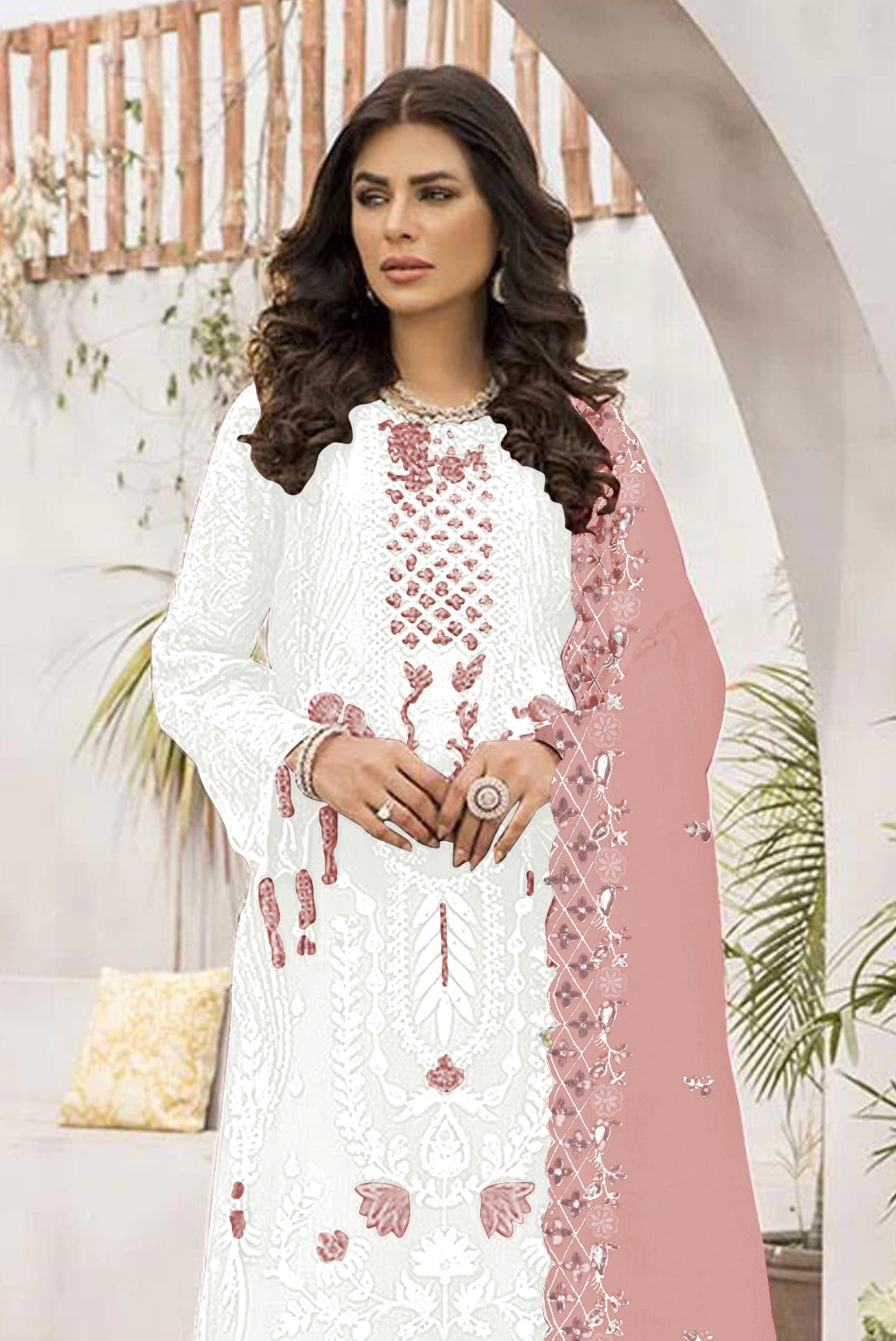

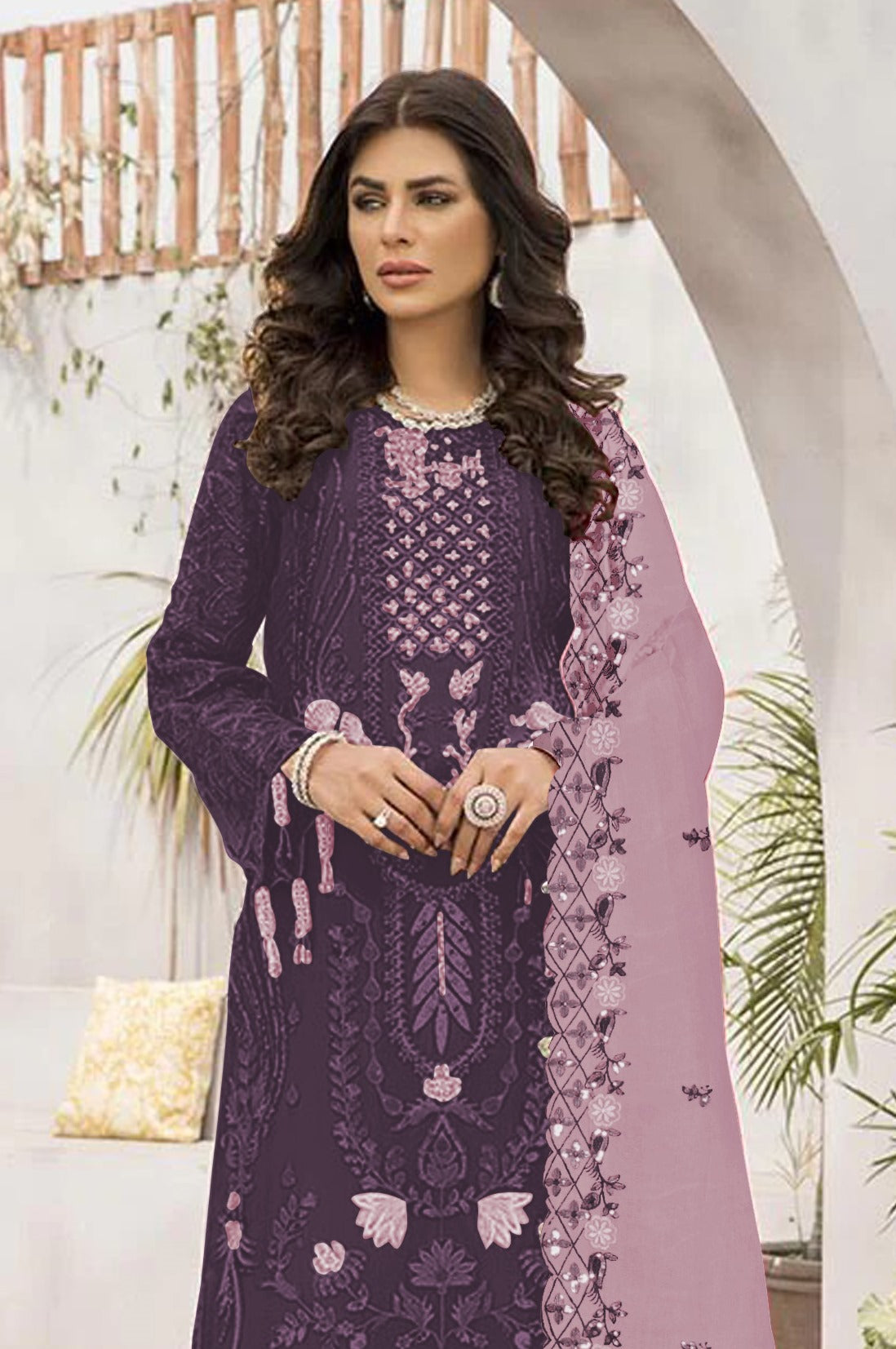

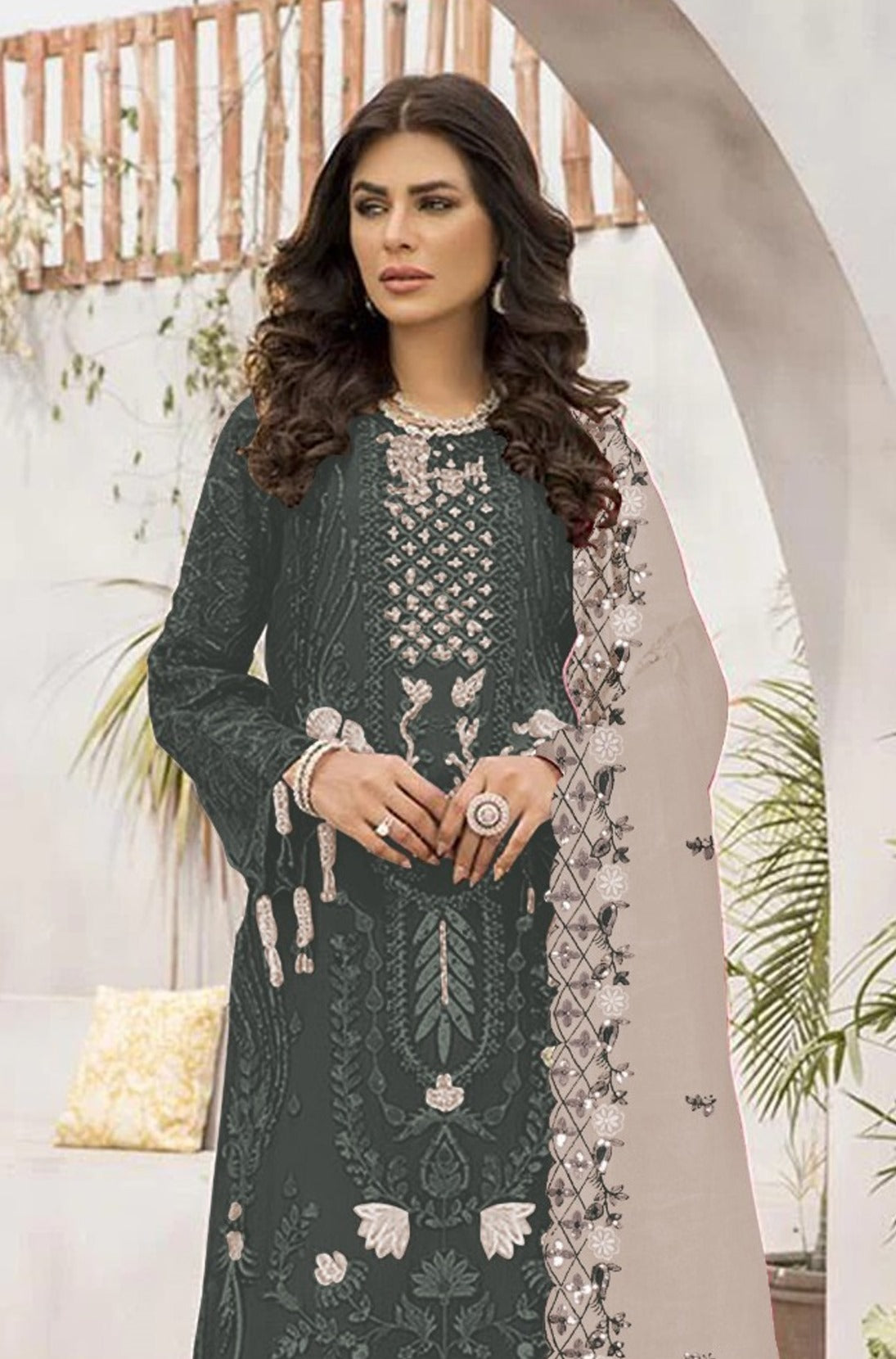

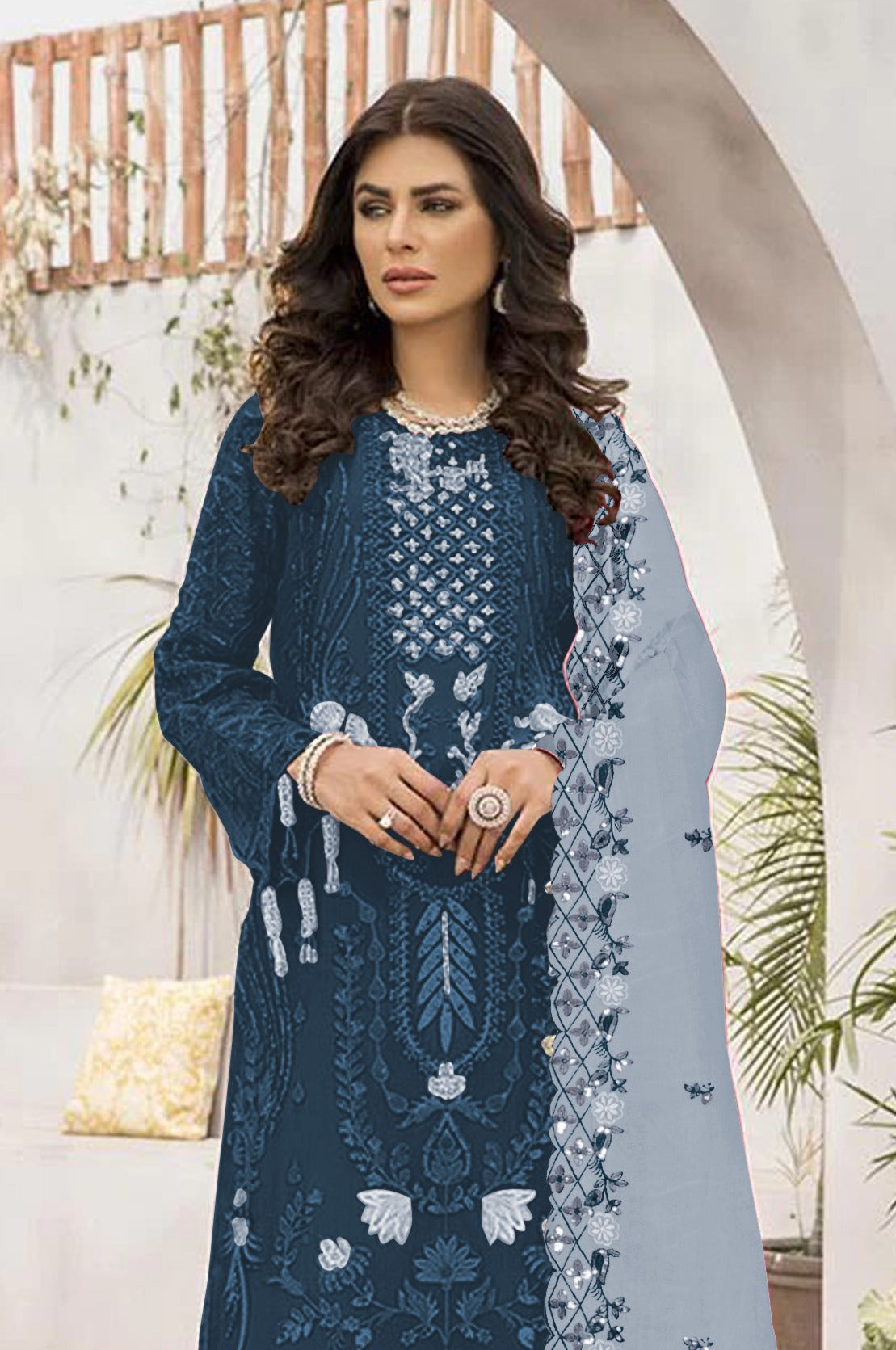

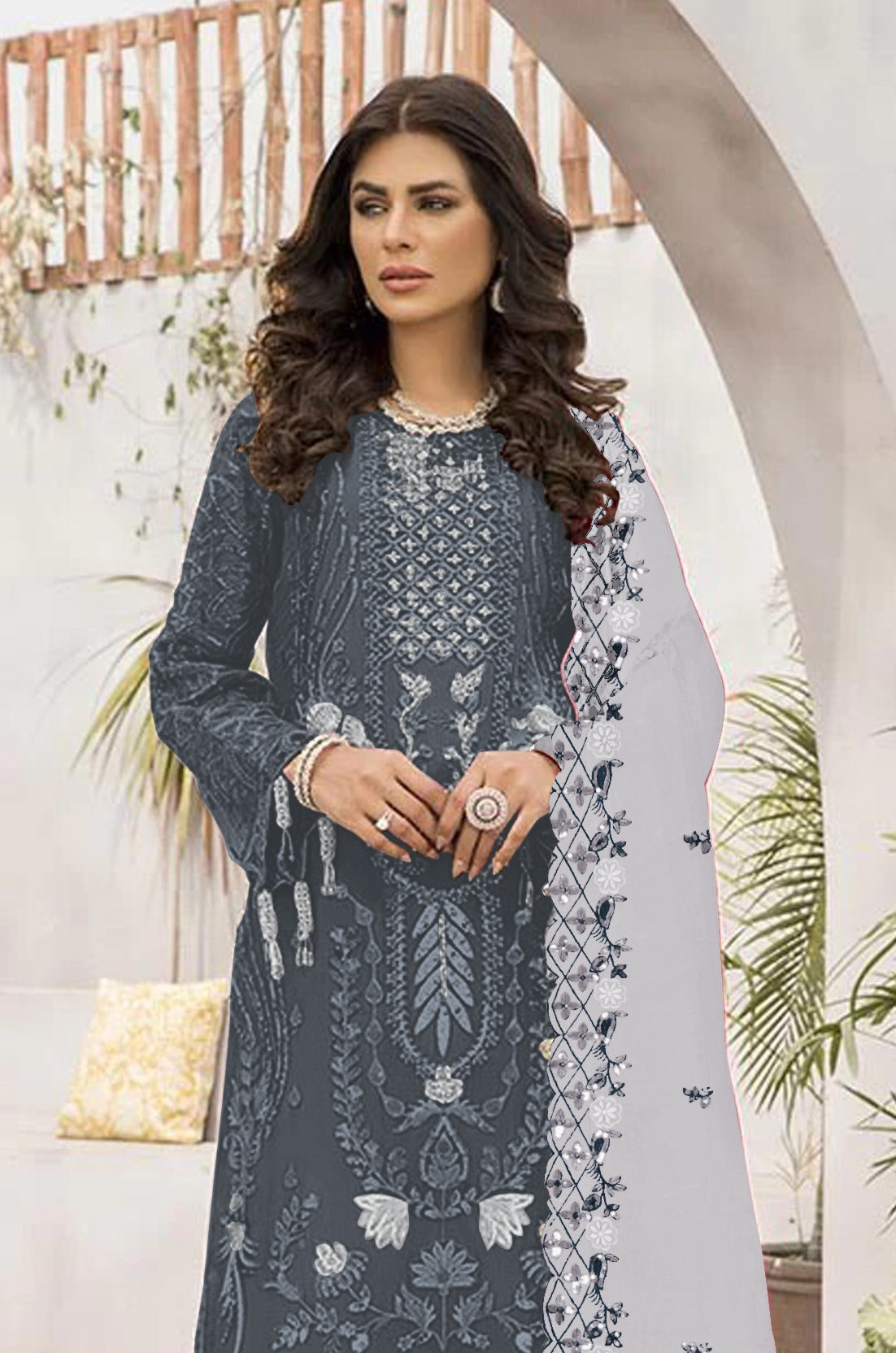


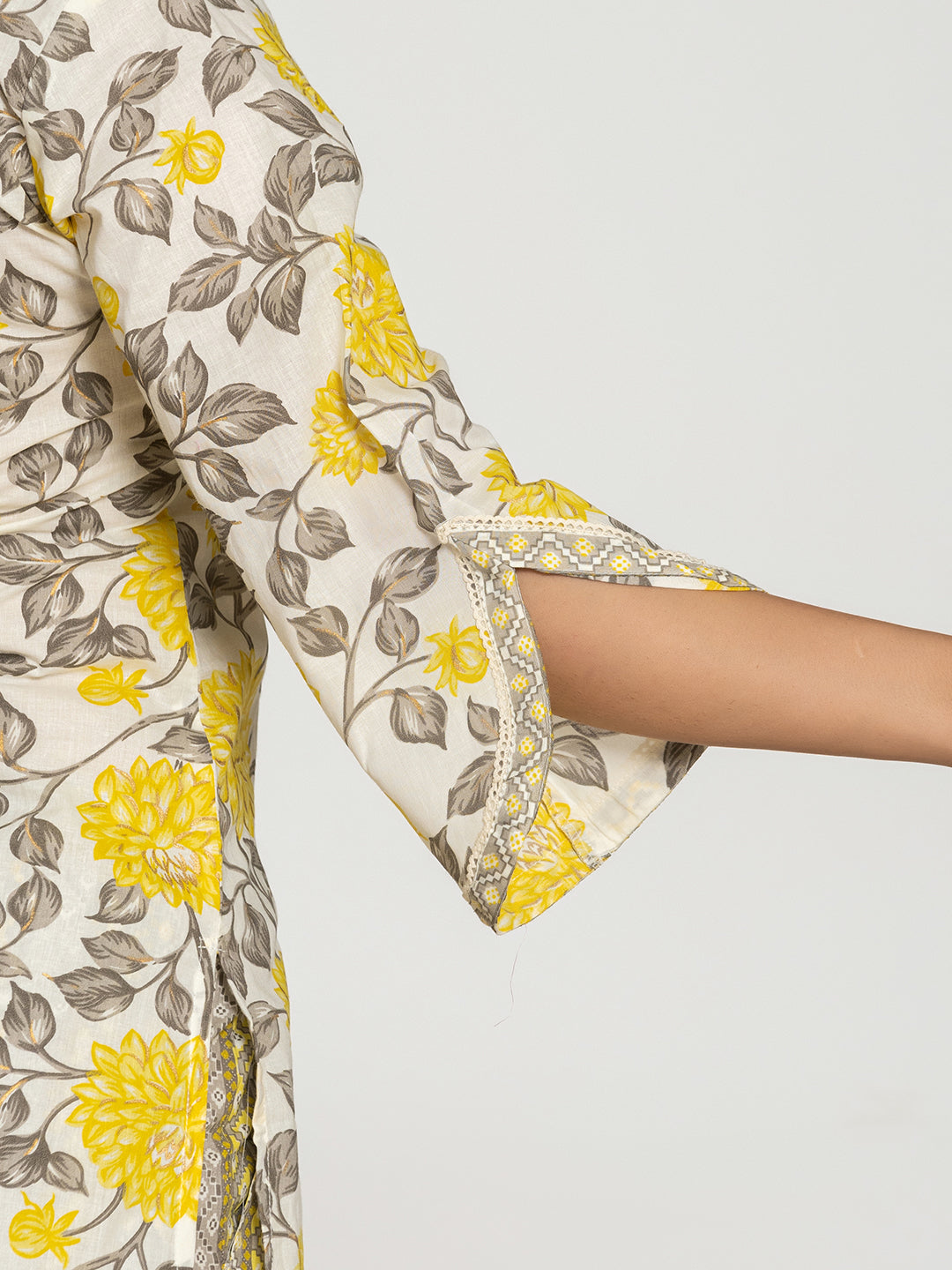

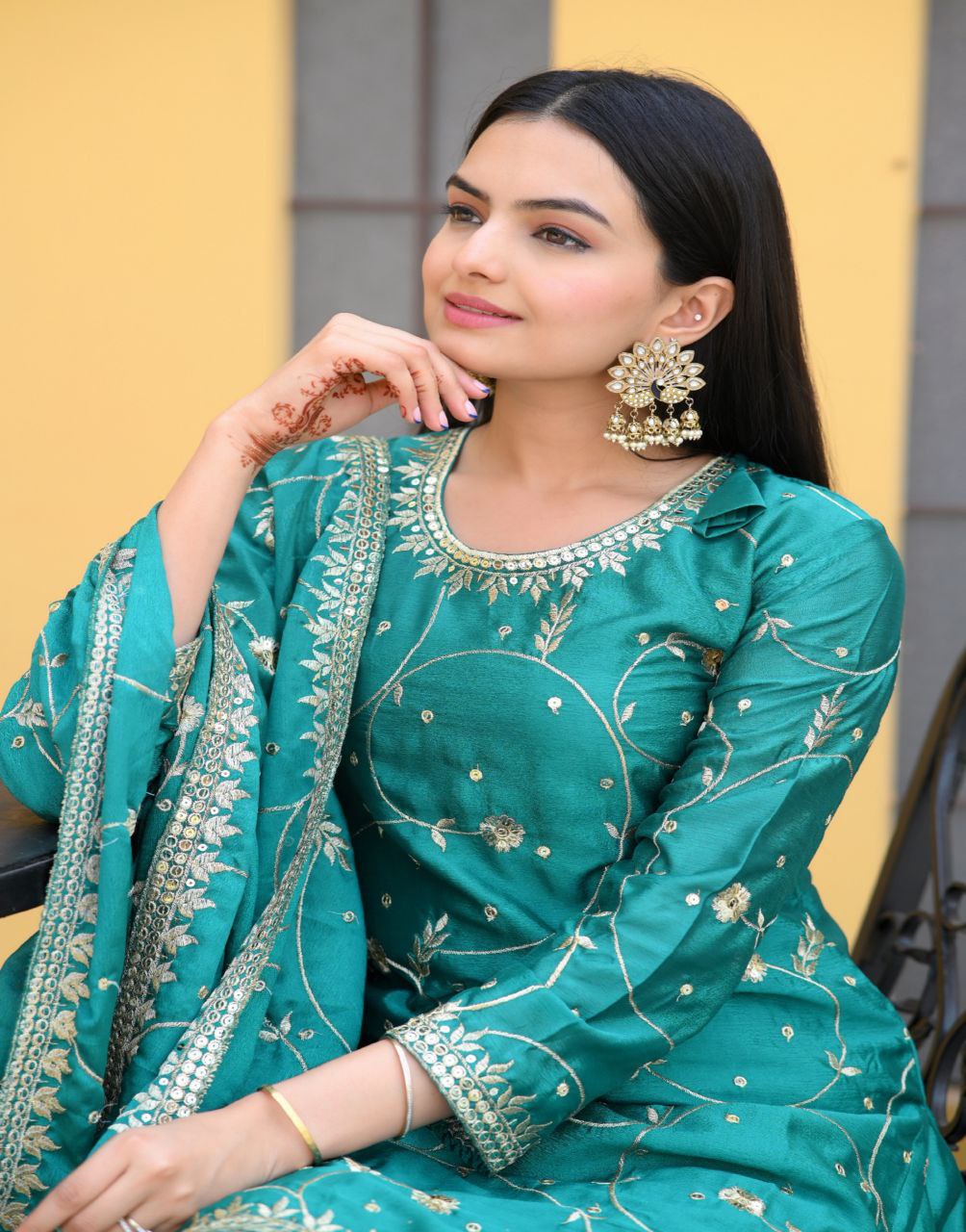

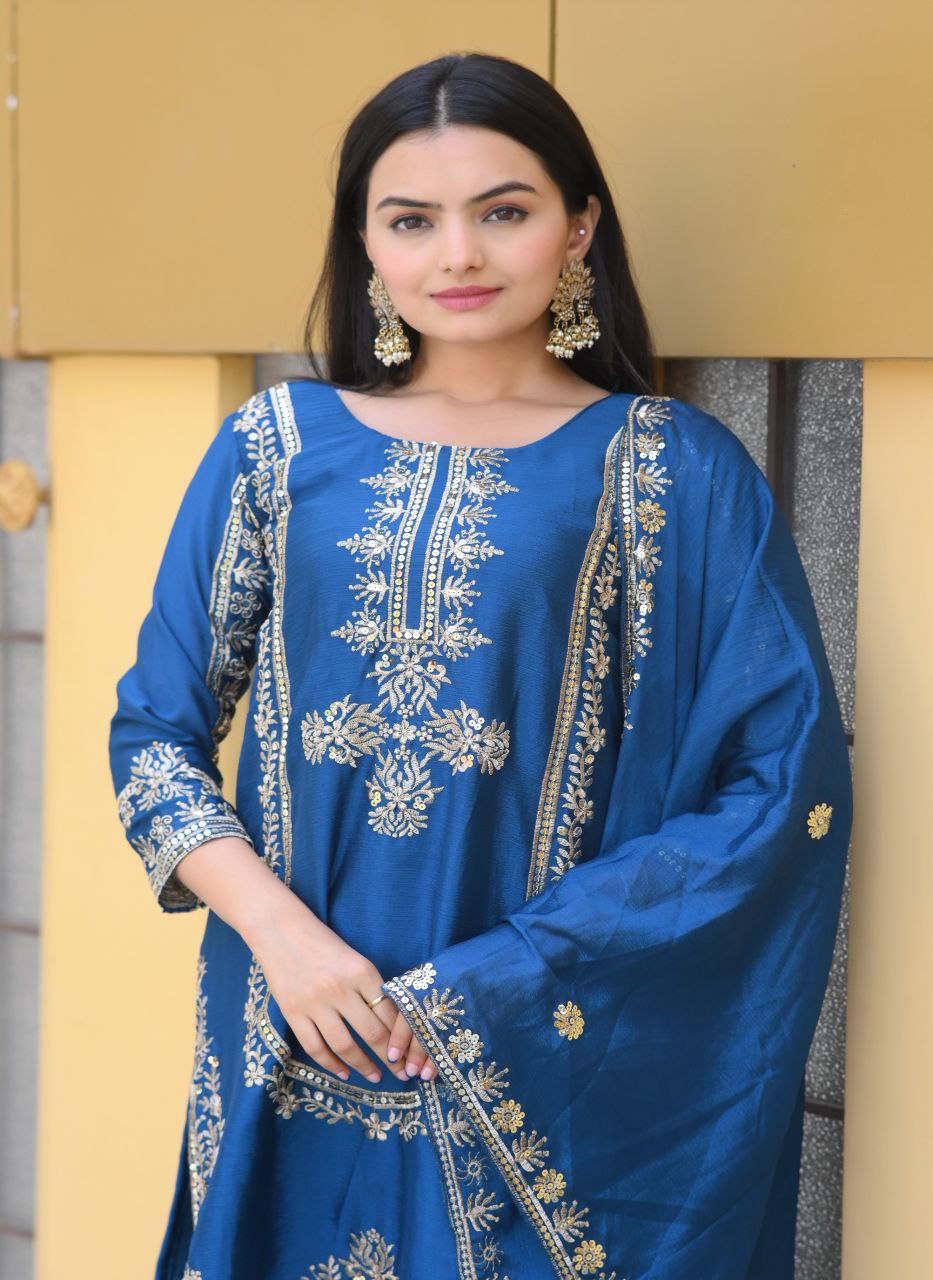


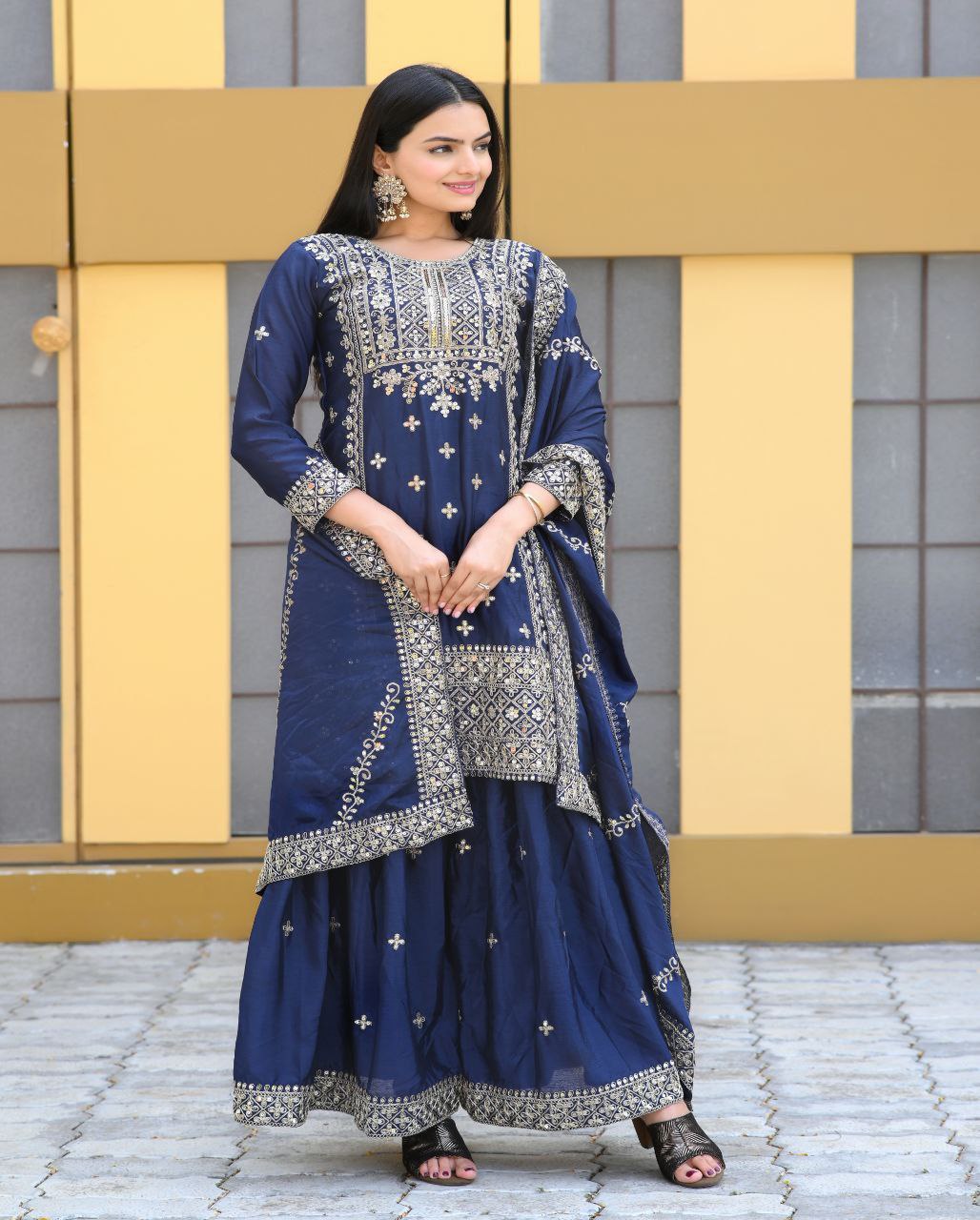


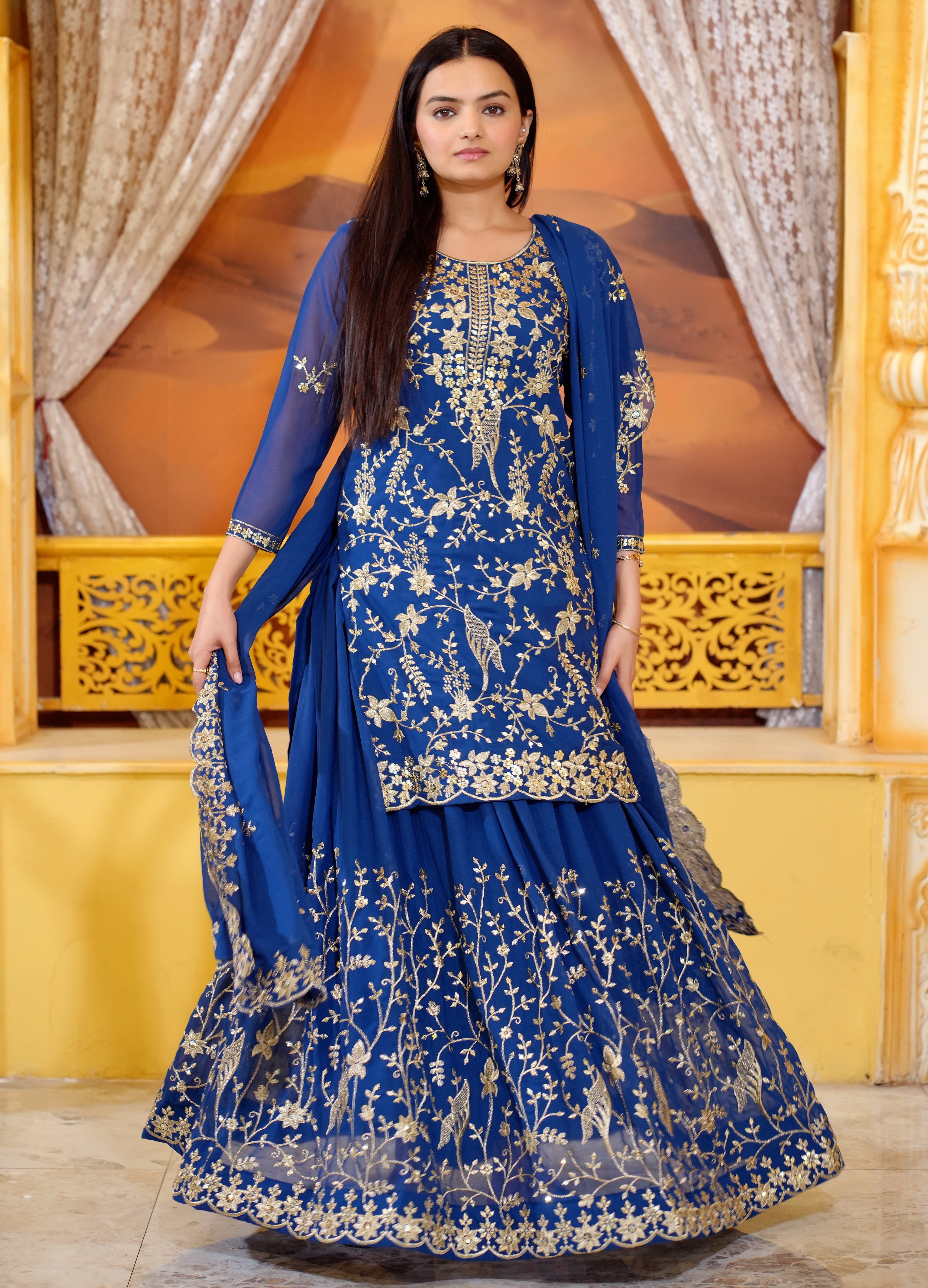

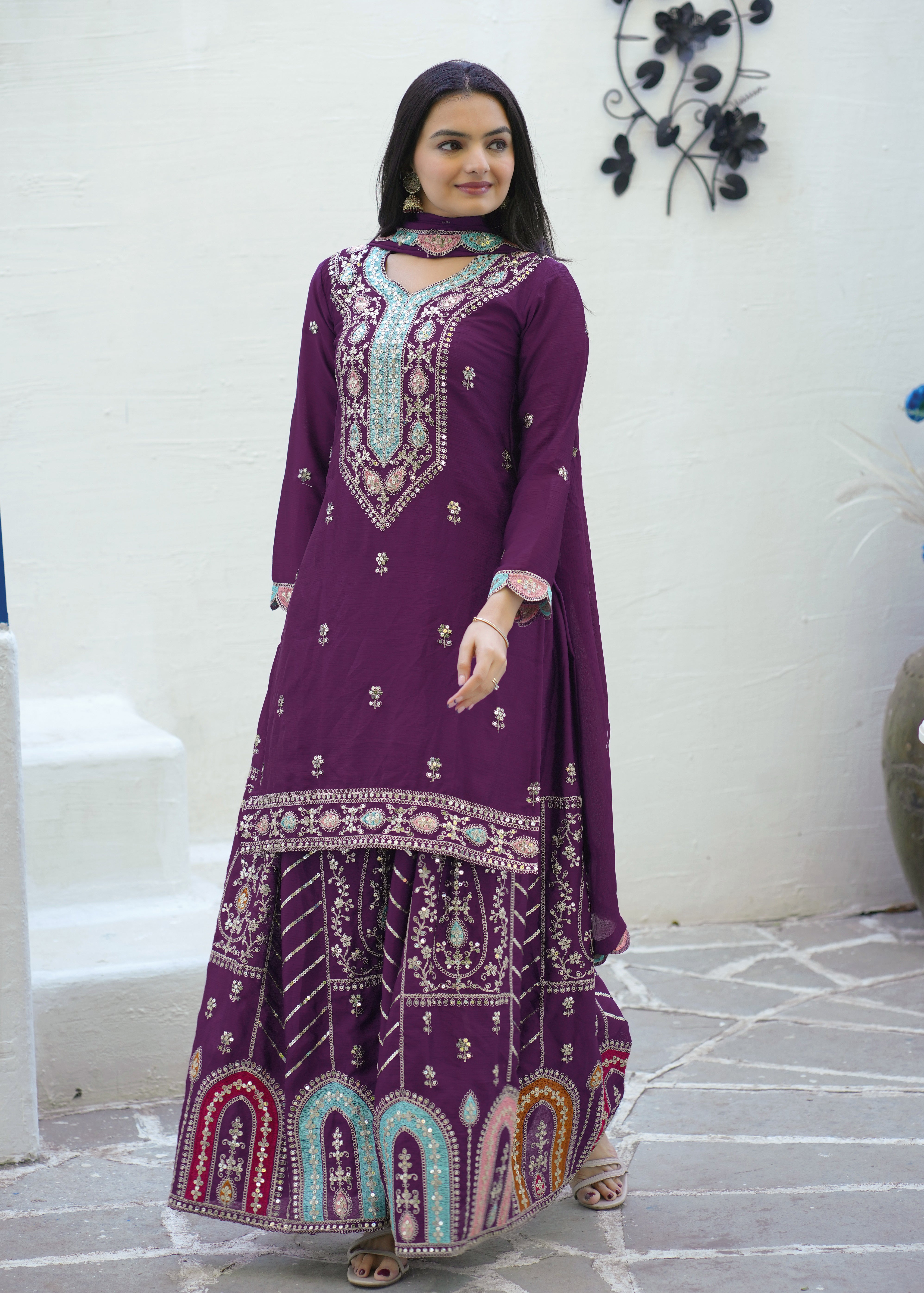

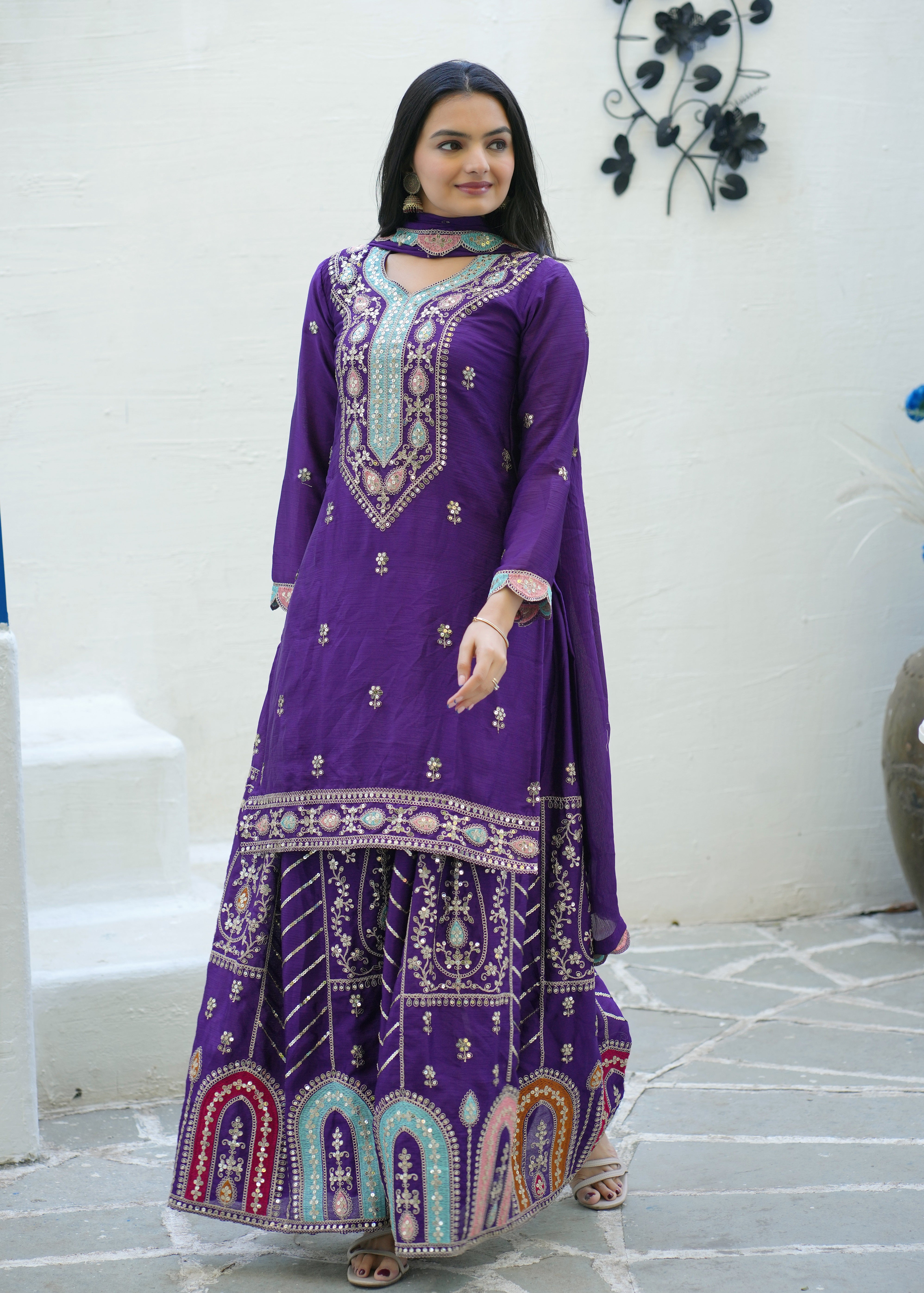


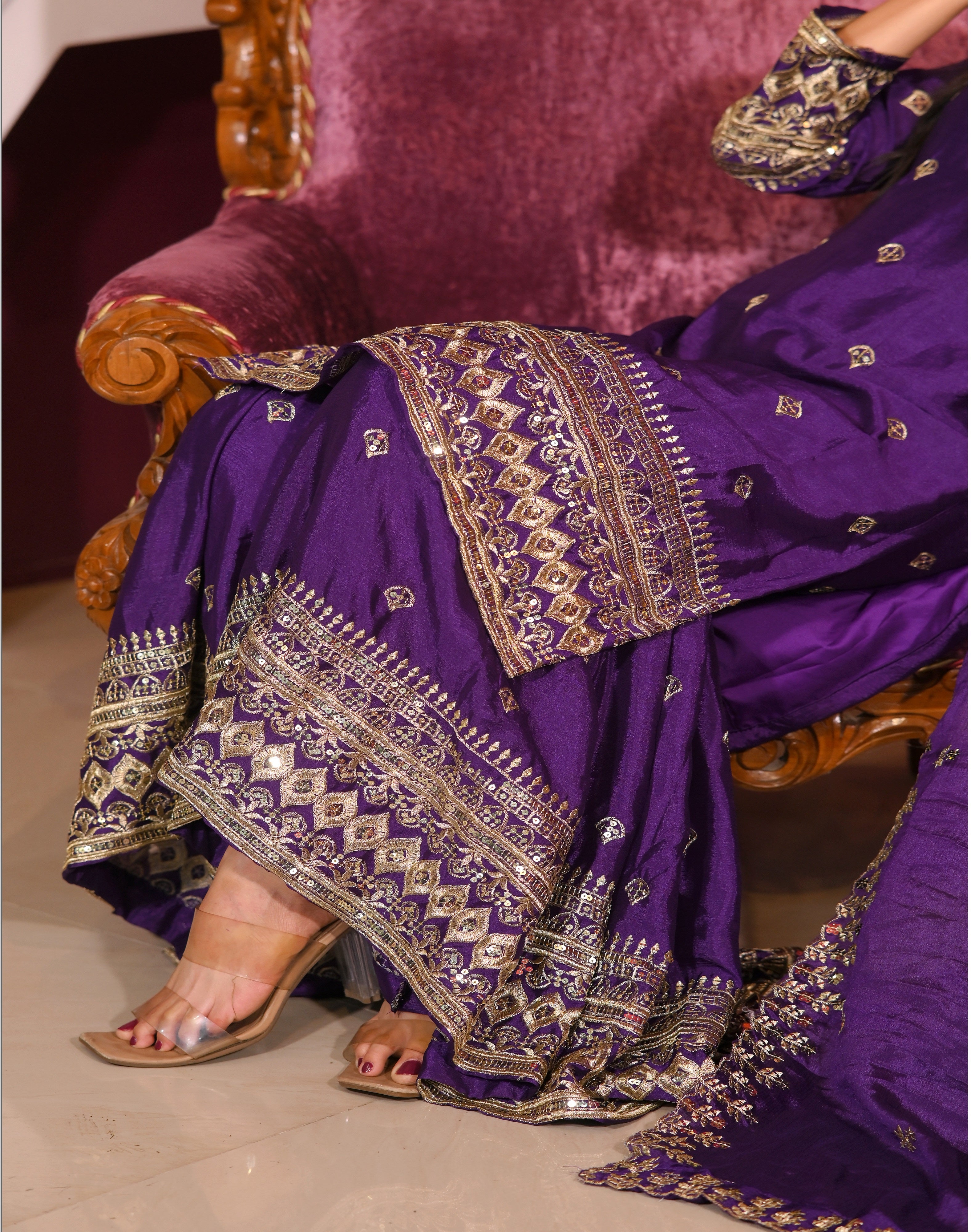

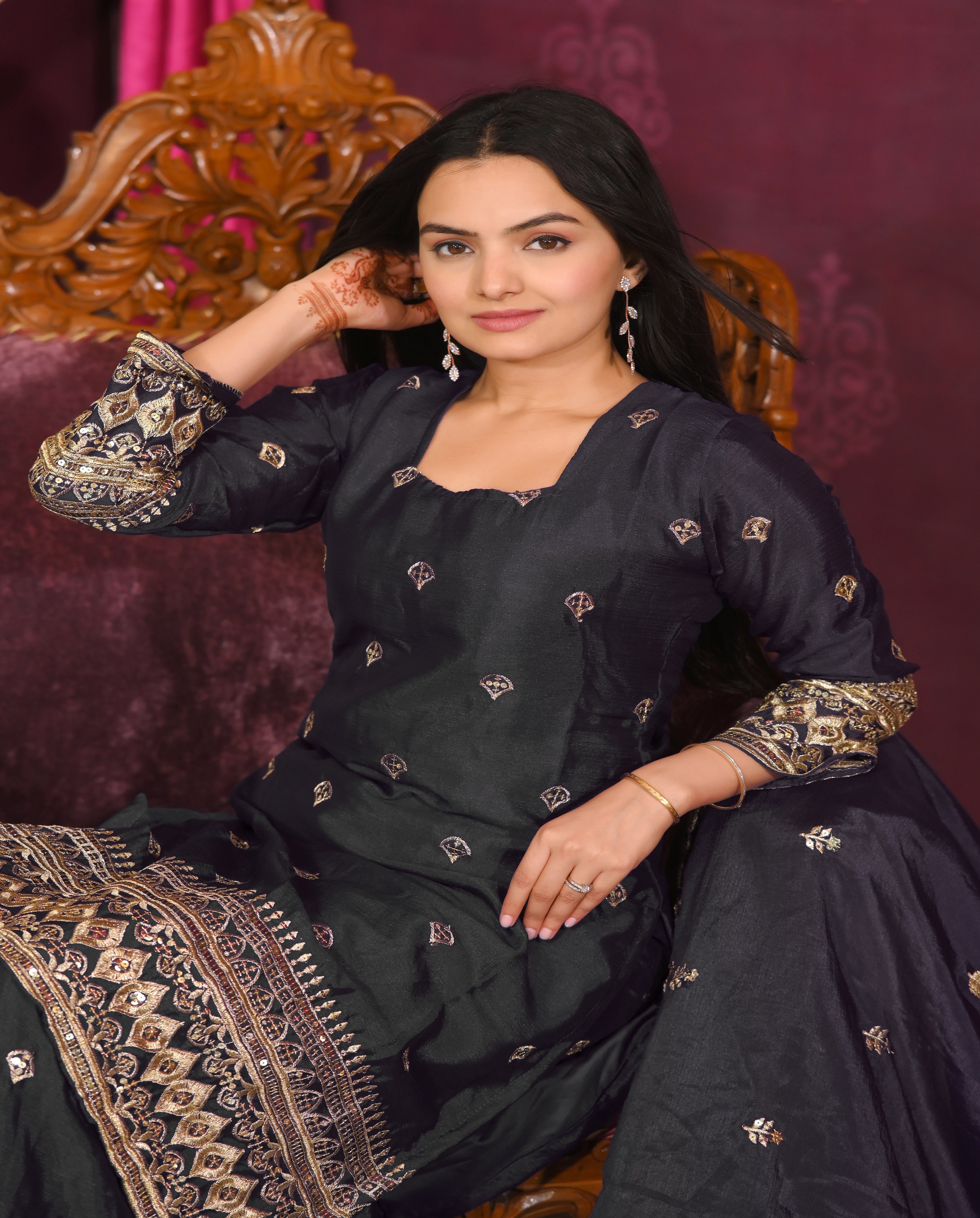


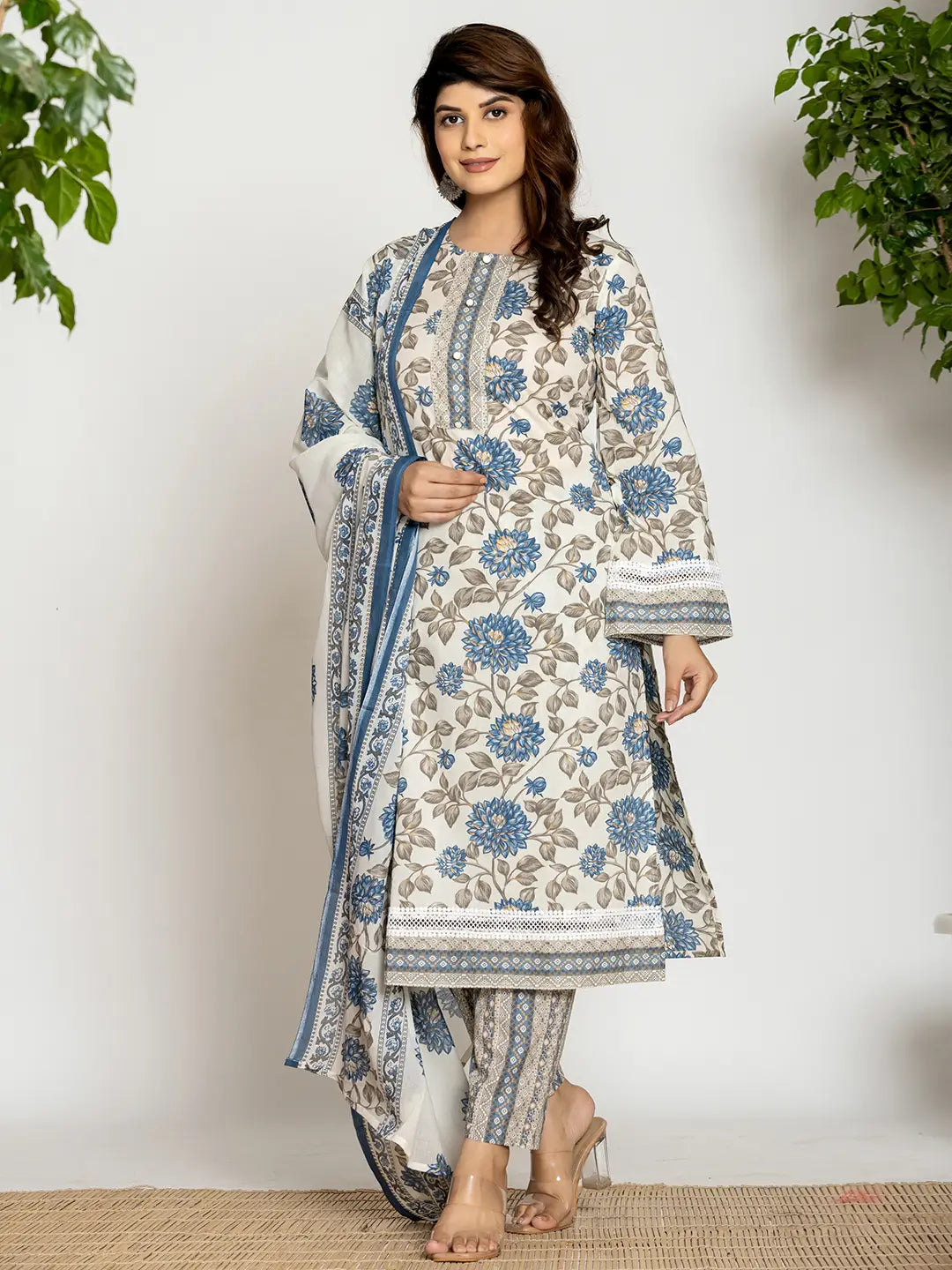
A Pakistani suit is built around a long, straight kameez, typically mid-calf or below the knee, with deep side slits, worn over a narrow trouser and finished with a large, substantial dupatta. The line is columnar rather than flared, which is what separates it from most Indian silhouettes, and the dupatta carries far more of the outfit than it does in Indian ethnic wear.
The suits here come in embroidered georgette, chinon, jacquard, cotton and velvet, with trouser, palazzo or sharara bottoms. Most are semi-stitched, which is covered first because it changes how you buy.
Semi-Stitched: What You Are Actually Buying
Most pieces in this collection are semi-stitched, which means they arrive as fabric rather than as a finished garment. This is the norm for Pakistani suits and is not a limitation but it catches out anyone expecting to open the parcel and wear it.
A semi-stitched suit typically arrives with the kameez panels cut and the embroidery already worked, but the side seams, sleeves and neckline unfinished. The trouser or sharara comes as fabric, and the dupatta is finished and ready to wear. A tailor completes the rest to your measurements.
The advantage is fit. Kameez length is a matter of personal preference as much as height, and semi-stitching lets you set it exactly along with sleeve length, neckline depth and how fitted the waist is. Ready-made suits make those decisions for you.
The cost is time. Allow one to two weeks with a tailor, and considerably longer in the weeks before Eid, when tailors in every city with a South Asian community are booked out. If an event is close, look at the express range or at ready-to-wear kurta sets instead. Listings state whether a piece is semi-stitched or sized, so check before ordering.
How a Pakistani Suit Differs
The terms overlap and get used loosely, but the silhouettes are genuinely distinct.
|
Style |
Shape of the kameez |
How it reads |
|
Pakistani suit |
Long and straight, mid-calf or lower, side slits |
Columnar, restrained, dupatta does the work |
|
Fitted yoke, flares from below the bust |
Full and dramatic through the skirt |
|
|
Knee-length, straight or A-line |
Shorter and more everyday |
|
|
Short kurta over wide flared trousers |
Volume sits in the bottom, not the top |
|
|
Gharara set |
Short kurta over trousers flared from the knee |
Distinct knee joint, most traditional |
The clearest contrast is with the anarkali, where the kameez flares from below the bust into a full skirt. A Pakistani kameez stays straight the whole way down, with movement coming from the side slits rather than from volume. Indian kurta sets are generally shorter and read more everyday. Our guide to types of salwar suits places all of these on the same scale.
The dupatta is the other difference. In a Pakistani suit it is usually wider, longer and more heavily worked than an Indian dupatta often the most embellished piece in the set. It is meant to be seen rather than tucked away, which is worth knowing when deciding how much embroidery you want on the kameez itself.
Bottoms
|
Bottom |
Shape |
Best with |
|
Straight trouser |
Narrow, ankle length, cigarette cut |
Long kameez, the classic pairing |
|
Palazzo |
Wide straight leg from the waist |
Shorter kameez, contemporary looks |
|
Sharara |
Flares wide from the waist or hip |
Short kameez, festive and formal |
|
Gharara |
Fitted to the knee, then flares sharply |
Traditional weddings and Eid |
The straight trouser is the classic pairing and the one that produces the columnar line the silhouette is known for. A palazzo adds width and reads more contemporary, working better with a shorter kameez than a full-length one. Shararas flare from the waist and are the festive choice.
Sharara and gharara are frequently confused and are not the same. A sharara flares steadily from the waist or hip to the floor. A gharara is fitted to the knee and then flares sharply outward, with a visible horizontal joint at the knee, traditionally trimmed with gota. The gharara is the older and more formal of the two, and remains a common choice for Eid and for weddings in Muslim families across South Asia.
Fabrics
|
Fabric |
Character |
Best for |
|
Cotton and muslin |
Breathable, holds a crisp line |
Daytime, summer, everyday wear |
|
Georgette and faux georgette |
Light and fluid, carries embroidery well |
The most common here; all occasions |
|
Chinon |
Soft with a slight sheen |
Party and evening wear |
|
Jacquard |
Woven pattern rather than printed |
Festive occasions, holds structure |
|
Velvet |
Heavy with depth, warmest option |
Winter weddings and evening events |
Georgette and faux georgette dominate this collection, and for good reason: they hold heavy embroidery without becoming stiff, and they drape into the straight line the silhouette needs. Chinon is softer with more sheen and suits evening wear. Jacquard has the pattern woven in rather than printed, which holds up better over time than surface work. Velvet is the winter option and by some distance the heaviest.
For hot weather, cotton and muslin are the practical choices here. Lawn, the fine, lightweight cotton associated with Pakistani summer collections is the classic warm-weather fabric for this silhouette, and cotton and muslin pieces serve the same purpose where lawn is not available.
Embroidery and Surface Work
Thread embroidery and sequin work are the standard treatments, usually concentrated on the kameez yoke, the sleeve borders, the hem and the dupatta. Because the kameez is long and straight, embroidery placement matters more than on a flared garment work along the hem draws the eye down and lengthens the line, while a heavily worked yoke keeps attention at the top.
One point specific to semi-stitched pieces: the embroidery is already worked onto the panels before you receive them, which means a tailor is working around fixed placement. If you want a significantly shorter kameez than the panel allows, the hem embroidery may have to be cut through. Discuss length with your tailor before they begin rather than after.
Measurements and Stitching
For semi-stitched pieces you supply measurements rather than choosing a size. The ones your tailor will need are bust, waist, hip, shoulder width, kameez length from the shoulder seam to the hem, sleeve length, and trouser length from waist to ankle.
Take a well-fitting kameez you already own to the tailor as a reference. It is far more reliable than measurements alone, because fit through the armhole and the depth of the side slits depend on construction rather than numbers. For the small number of ready-sized pieces in this collection, check the chart on the individual product page sizing is not standardised across the independent labels stocked. Extended sizing is grouped in plus size.
Shop by Occasion
Eid
New clothes for Eid are customary, and this silhouette is the most common choice. Order early the constraint is tailoring capacity rather than stock, and tailors are overwhelmed in the fortnight before both Eid al-Fitr and Eid al-Adha. Lighter cotton and georgette suits work for daytime gatherings, with velvet and heavily embroidered pieces reserved for evening. Eid kurta sets and Eid dresses cover ready-to-wear alternatives, and men’s Eid kurta sets are listed separately.
Weddings and Formal Events
Heavily embroidered georgette or velvet with a gharara or sharara bottom, and a worked dupatta. This reads formal enough for nikah and walima functions without the weight of a lehenga. As a guest, stay clear of the palette the bride has chosen if you know it, and avoid the heaviest gold work.
Daytime and Everyday
Printed cotton and muslin suits with a straight trouser are the practical end of the range comfortable across a full day and appropriate for most workplaces. Kurtas and kurtis cover the same brief in a shorter, ready-to-wear form.
Styling
Because the dupatta carries most of the visual weight, jewellery should stay restrained. Jhumkas or studs with a worked dupatta are usually enough; a necklace competes with it and tends to disappear underneath. A plain dupatta leaves room for a fuller jewellery set. Additional dupattas can be bought separately to restyle a suit you already own, which is a cheap way to get a second look from one set.
Flats and low heels suit the straight silhouette better than high heels, which shorten the visible line of the trouser. A clutch or potli works better than a shoulder bag, which drags on the dupatta.
Care
Cotton and muslin suits can be hand washed cold and dried in shade. Georgette, faux georgette, chinon, jacquard, velvet and anything embroidered or sequinned should be dry cleaned. Sequin work in particular does not survive machine washing the threads holding each sequin abrade and the sequins come away.
Store suits hanging rather than folded where the kameez is long, since a fold across heavy embroidery leaves a permanent crease line. Turn the kameez inside out so surface work does not catch on other garments, and keep zari and metallic thread out of plastic covers, which trap moisture and accelerate tarnishing.
FAQs: Pakistani Suits
What is a Pakistani suit?
A long, straight kameez, usually mid-calf or below the knee with deep side slits, worn with a narrow trouser and a large dupatta. The silhouette is columnar rather than flared, and the dupatta is typically the most heavily worked piece in the set.
What does semi-stitched mean?
The suit arrives as fabric rather than a finished garment. The kameez panels are cut and the embroidery already worked, but the seams, sleeves and neckline are unfinished, and the trouser comes as fabric. A tailor completes it to your measurements. The dupatta is usually finished and ready to wear.
How long does stitching take?
One to two weeks with a tailor in normal circumstances, and longer in the weeks before Eid when demand peaks. Factor this in before ordering for a dated event, since the constraint is tailoring capacity rather than shipping.
What is the difference between a Pakistani suit and an anarkali?
An anarkali has a fitted yoke and flares from below the bust into a full skirt. A Pakistani kameez stays straight from shoulder to hem, with movement coming from the side slits. Anarkalis read fuller and more dramatic; Pakistani suits read more restrained and columnar.
What is the difference between a sharara and a gharara?
A sharara flares steadily from the waist or hip to the floor. A gharara is fitted to the knee and then flares sharply outward, with a visible horizontal joint at the knee that is traditionally trimmed with gota. The gharara is the older and more formal of the two.
What measurements do I need for a semi-stitched suit?
Bust, waist, hip, shoulder width, kameez length from the shoulder seam to the hem, sleeve length, and trouser length from waist to ankle. Taking a well-fitting kameez to your tailor as a reference is more reliable than measurements alone.
Can the kameez be shortened?
Within limits. The embroidery is worked onto the panels before dispatch, so hem detailing sits at a fixed position. Shortening significantly may mean cutting through it. Discuss the length you want with your tailor before they start.
What is lawn fabric?
A fine, lightweight plain-weave cotton, closely associated with Pakistani summer collections. It is the classic warm-weather fabric for this silhouette. Where lawn is not available, cotton and muslin pieces serve the same purpose.
What should I wear for Eid?
Lighter cotton or georgette suits for daytime gatherings, and embroidered georgette or velvet for evening. Order well in advance, since tailors are heavily booked in the fortnight before Eid. Eid collections group ready-to-wear options for anyone short on time.
How do I wash a Pakistani suit?
Cotton and muslin can be hand washed cold and dried in shade. Georgette, chinon, jacquard, velvet and anything embroidered or sequinned should be dry cleaned. Sequin work does not survive machine washing.
Do you ship to the USA?
Yes, with tariffs and duties covered, so nothing further is payable on delivery. Timelines are on the shipping policy page and exchanges on the returns policy page. New pieces appear in new arrivals.